AI Won’t Replace Reviewers. It Will Change What They Spend Time Reviewing.
Much of the discussion surrounding AI in clinical development has focused on automation.
Can AI identify discrepancies?
Can it generate outputs?
Can it validate tables faster than humans?
These are important questions.
But they miss a more significant opportunity.
The future of clinical review is not about replacing human expertise.
It’s about eliminating the inefficiencies that prevent experts from applying that expertise where it matters most.
For statistical programmers, biostatisticians, and QC teams, the challenge has never been a lack of knowledge.
The challenge has been finding the right issues, at the right time, with the right context.
This is where AI-enabled review workflows are beginning to transform clinical development.
The Traditional Review Process Was Built Around Documents
Most review processes today remain highly document-centric.
Tables are generated.
Files are distributed.
Comments are collected.
Issues are tracked separately.
Updated versions are circulated.
The cycle repeats.
While effective, these workflows often create friction:
- Findings become disconnected from the source output.
- Review cycles become difficult to track.
- Stakeholders work from different versions.
- Important issues can be lost in email chains or spreadsheets.
- Teams spend significant time coordinating work rather than resolving issues.
As study complexity increases, these inefficiencies become more difficult to manage.
The challenge is no longer simply identifying discrepancies.
It is coordinating the review process around them.
AI Changes What Gets Reviewed
Historically, reviewers have spent substantial time searching for potential issues.
This often meant manually comparing tables, checking consistency across outputs, validating references, and reviewing formatting standards.
AI changes this dynamic.
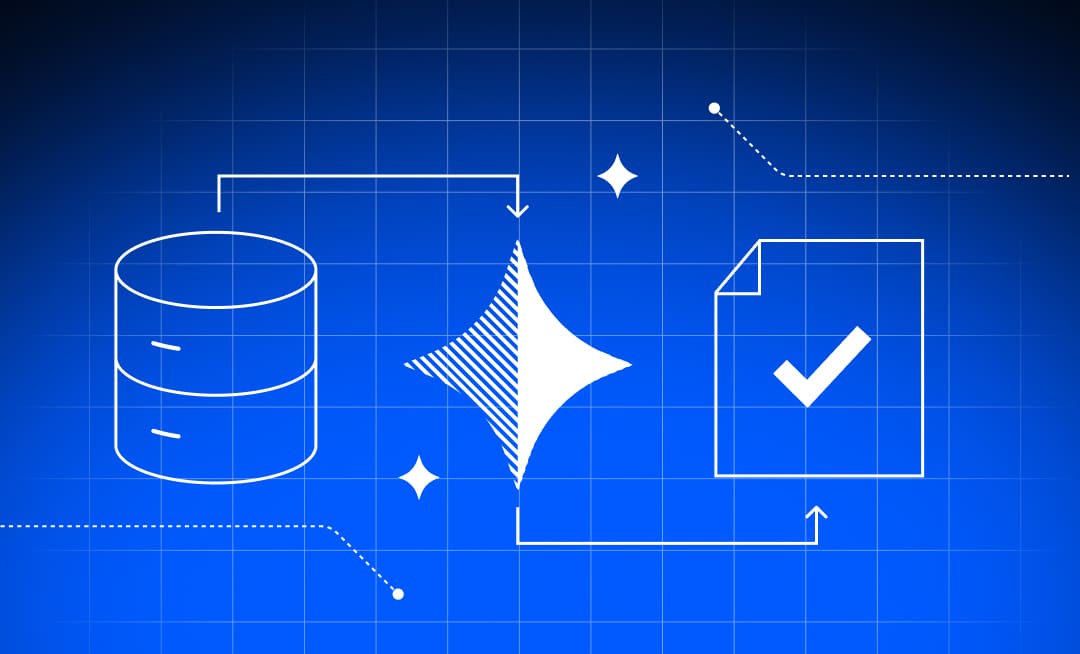
Instead of asking reviewers to search for problems, AI can surface potential findings automatically.
Cross-table inconsistencies.
Reference discrepancies.
Hierarchy issues.
ADaM-to-TLF differences.
Formatting deviations.
Potential risks become visible earlier in the review cycle.
The role of the reviewer shifts from searching to evaluating.
That distinction matters.
Experts spend less time locating issues and more time applying scientific judgment to the issues that matter.
Human Expertise Remains the Decision Engine
Despite rapid advances in AI, clinical development remains a domain where context matters.
A discrepancy is not always an error.
A finding is not always a problem.
A recommendation is not always the correct decision.
Human expertise remains essential for interpreting results, understanding study-specific context, and making decisions that affect quality and regulatory outcomes.
The most effective AI implementations recognize this reality.
AI identifies.
Humans evaluate.
AI accelerates.
Humans decide.
AI supports.
Humans remain accountable.
This partnership creates a review process that is both faster and more robust.
Collaboration Becomes the Workflow
Another important shift is the movement away from disconnected review activities.
Traditional workflows often require reviewers to move between outputs, issue logs, emails, spreadsheets, and tracking systems.
The result is fragmented communication and limited visibility.
Modern review environments bring those activities together.
Findings become tasks.
Comments remain attached to the relevant output.
Reviewers collaborate within the same environment.
Status updates become visible in real time.
Managers gain transparency into project progress without requesting separate reports.
The workflow becomes connected rather than distributed.
As a result, teams spend less time managing reviews and more time completing them.
Visibility Creates Better Quality
One of the most overlooked benefits of AI-enabled review workflows is visibility.
Quality issues often persist not because teams fail to identify them, but because organizations lack transparency into the review process itself.
Who owns the issue?
Has it been reviewed?
Is it still open?
Was it addressed in the latest version?
How many critical findings remain?
Without visibility, quality becomes reactive.
With visibility, quality becomes manageable.
Real-time dashboards, task management, audit trails, and review analytics create a shared understanding of project status across the entire team.
This enables earlier intervention and more predictable delivery.
The Future Review Team
The future review team will not be smaller because of AI.
It will be more effective because of AI.
Statistical programmers will spend less time on repetitive comparisons.
Biostatisticians will spend less time searching for discrepancies.
Reviewers will spend less time coordinating activities.
Managers will spend less time collecting status updates.
The work does not disappear.
The work becomes more focused.
The organizations that benefit most from AI will not be those that remove humans from the process.
They will be those that empower humans with better information, better visibility, and better workflows.
Beyond Automation
The conversation around AI in clinical development often begins with automation.
But automation is only the first step.
The larger opportunity is operational transformation.
The most successful organizations will not simply use AI to complete existing tasks faster.
They will redesign how review work is organized, coordinated, and executed.
Because the future of clinical review is not AI alone.
And it is not human expertise alone.
It is the combination of both.
The organizations that thrive will not be the ones that automate the most work.
They will be the ones that make the best use of their experts.