VERIFY PLATFORM OVERVIEW
The validation layer
for clinical biometrics

VERIFY MODULES
One platform. Multiple levels of validation.

Each module builds on what’s already there
Verify is sold as a capability ladder. Each module solves a specific problem on its own, and each one makes the others more useful. A team can start with deterministic validation first, add the workflow layer later on, and add on generative AI to independently regenerate tables from source data while it compares them to a programmer’s output with every result independently checkable against the source.

Turn validation findings into faster resolution
In all, Verify brings review, collaboration, task management, progress tracking, and traceability into one connected platform, giving teams greater visibility and control from validation through resolution.

VERIFY MODULES
Verify Intelligence
Independent generative AI-powered statistical intelligence
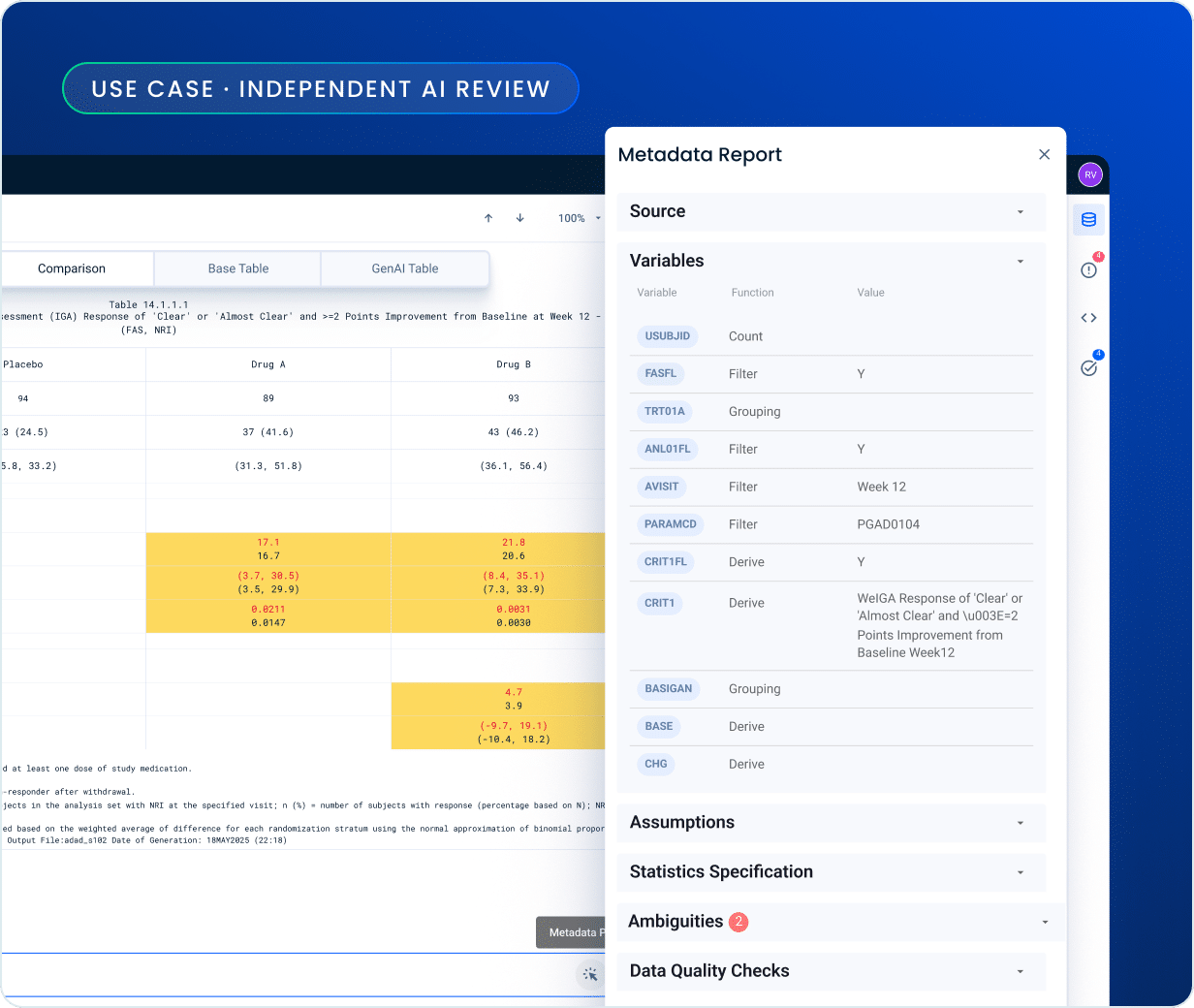
Verify Intelligence introduces independent AI-generated TLFs for validation, automated comparison, and discrepancy detection. Rather than simply adding more automation to the existing QC process, it provides an independent analytical perspective that helps teams identify, trace, understand, and ultimately resolve differences between outputs via an automated co-worker thus significantly reducing the need for double programming and associated costs while also reducing risk.

VERIFY MODULES
Verify Validate
Automated validation and centralized, traceable review
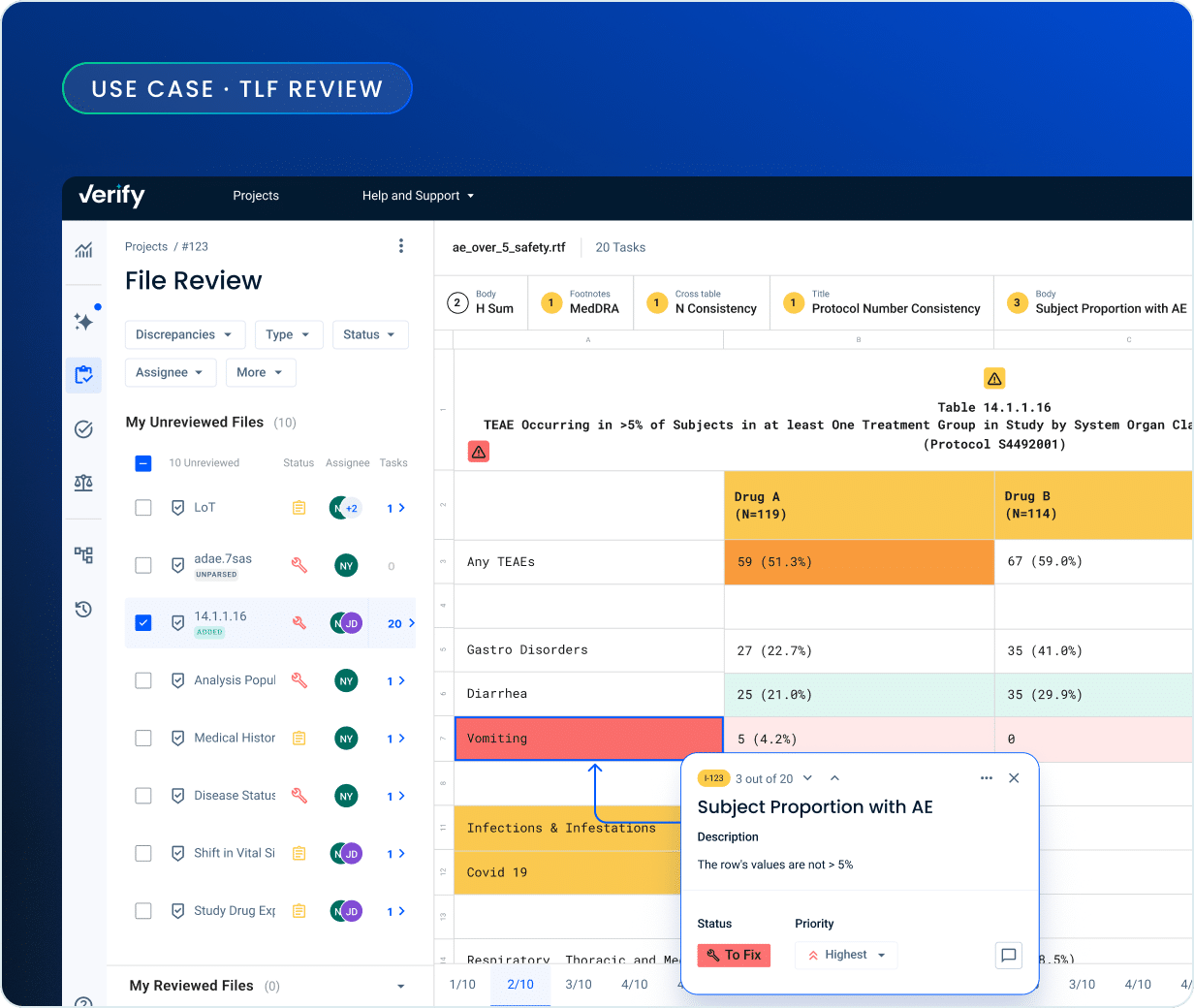
Verify Validate is the essential quality foundation of the Verify platform. Automated and AI-assisted validation checks identify formatting and reference issues, validate values and hierarchies within TLFs, and detect inconsistencies across table sets. Findings are centralized in a traceable review environment, helping teams catch errors earlier and improve the consistency and efficiency of QC.

VERIFY MODULES
Verify Control
Governance, oversight, and orchestration across studies and portfolios
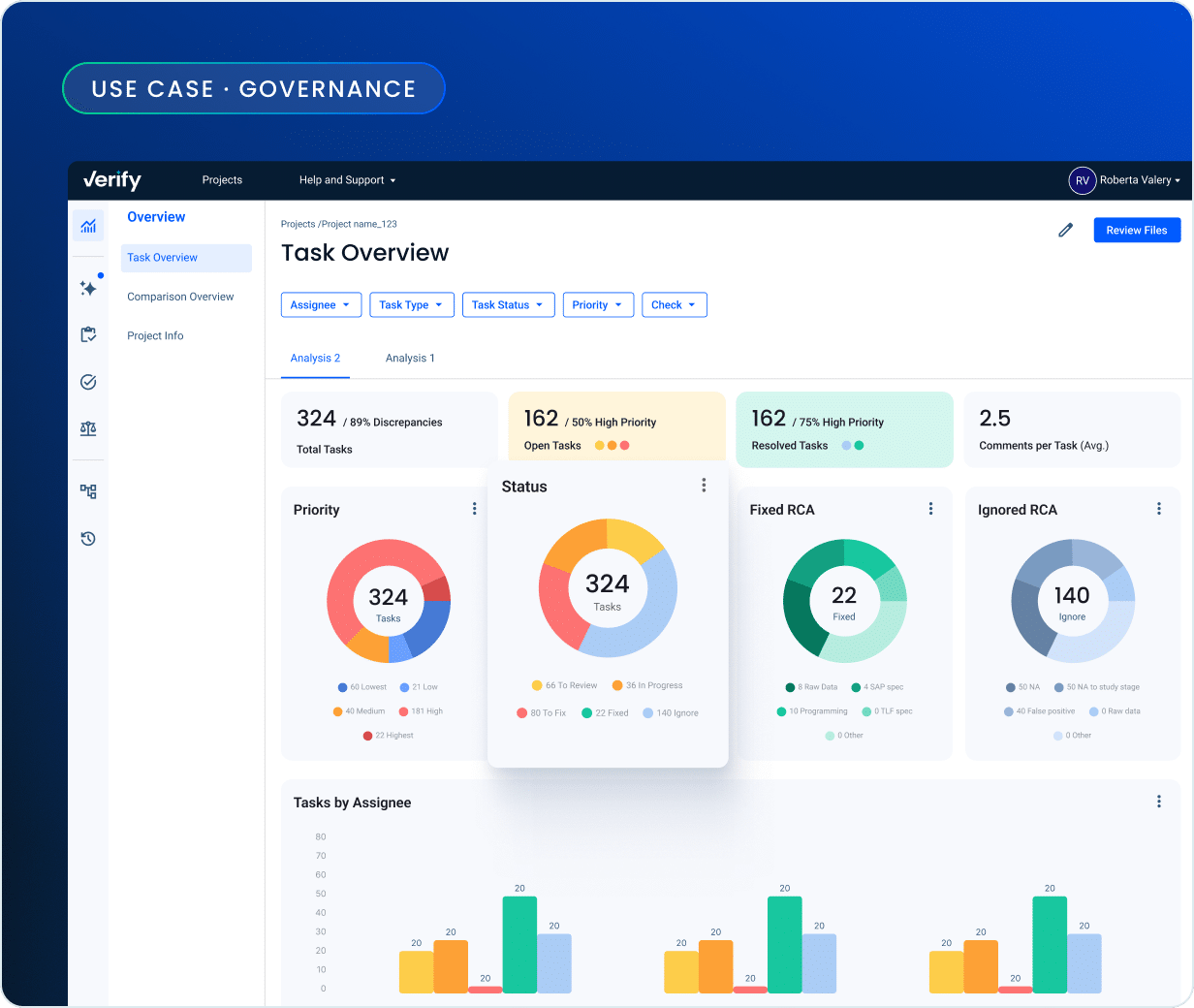
Verify Control builds on the core Verify Validate solution by turning individual review activities into a governed quality process. Dashboards, progress tracking, workflow visibility, and oversight capabilities give teams a centralized quality command center across a study or portfolio — the visibility needed to understand what has been reviewed, what remains outstanding, where issues exist, and how work is progressing.

VERIFY MODULES
Verify Translate
Standardize and harmonize data for downstream clinical workflows
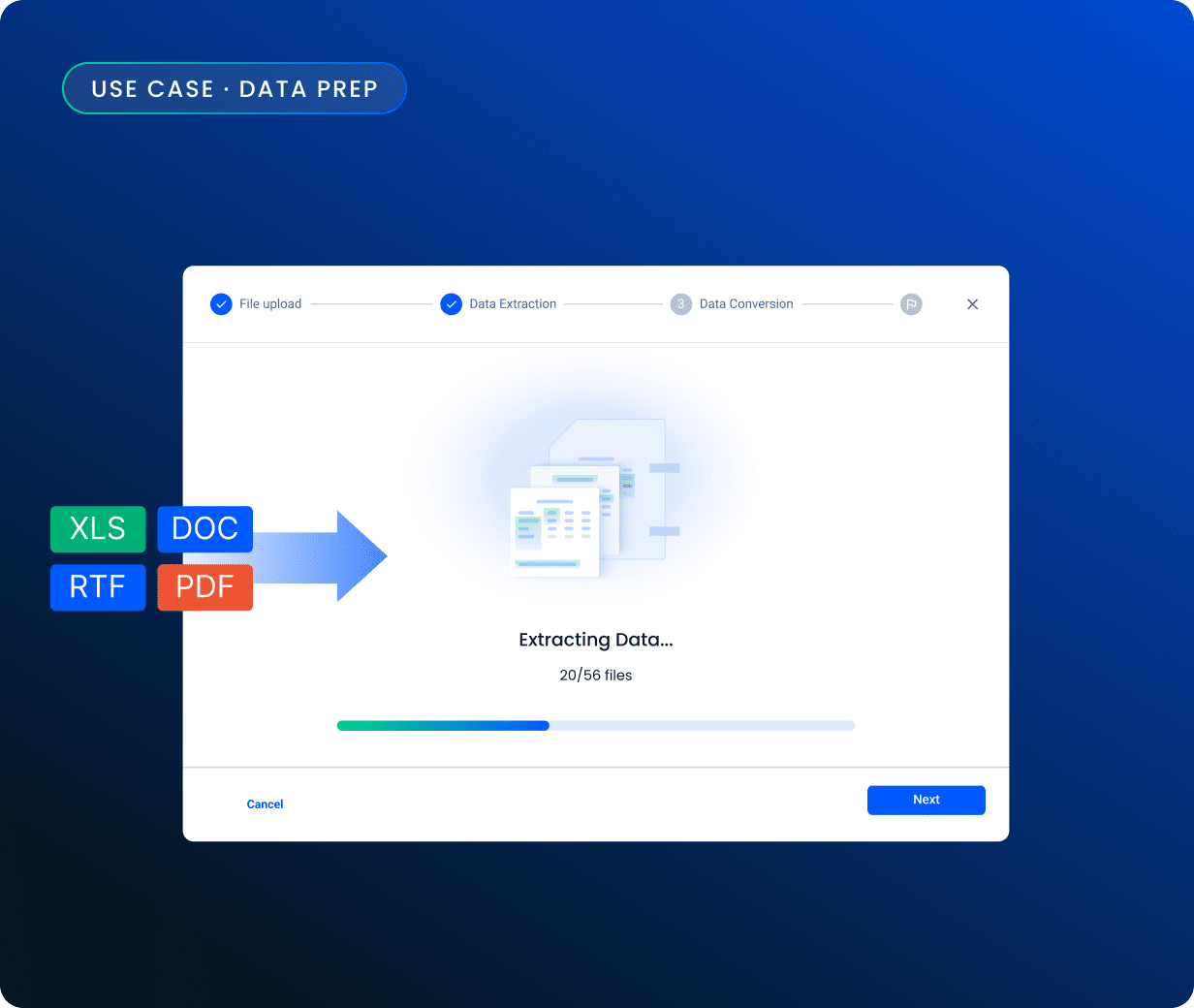
Verify Translate harmonizes and standardizes disparate data structures and formats before downstream review and validation begin, creating consistent, usable inputs for clinical workflows. It can operate as a standalone offering, particularly for organizations dealing with multiple CROs, acquired data environments, legacy standards, or inconsistent source formats.

INTEGRATION LAYER
Synapta API
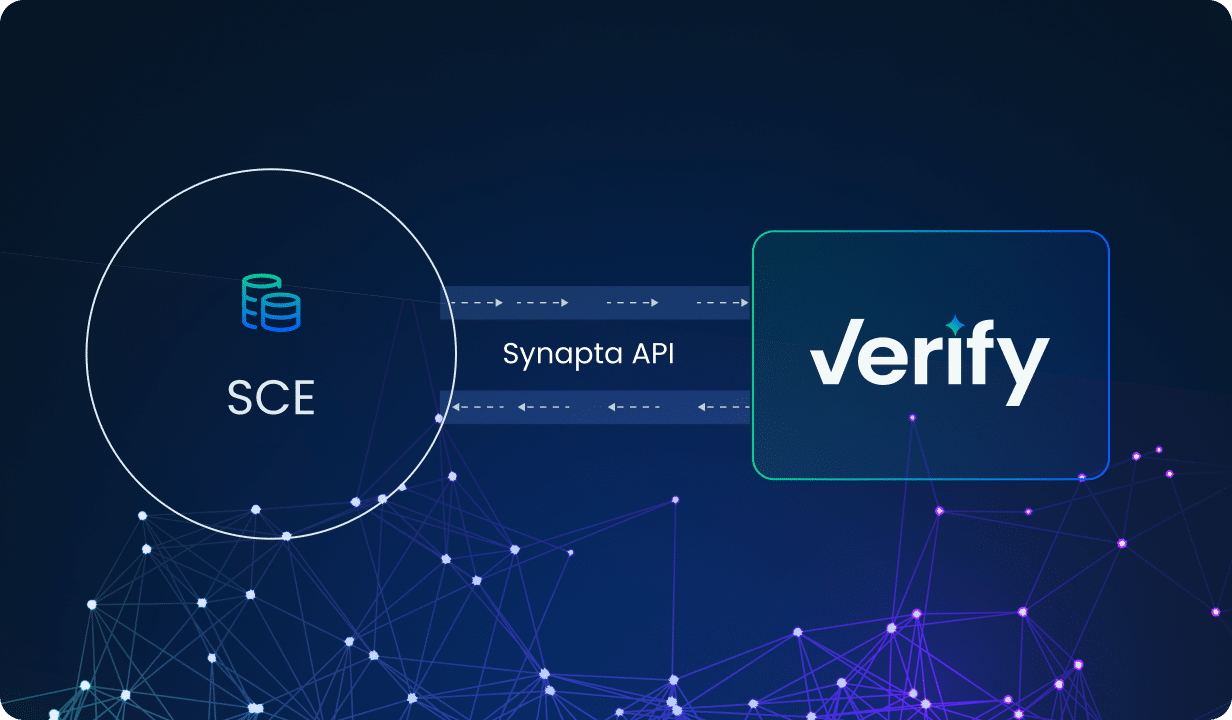
The Synapta API is an integration interface that programmatically connects Verify directly into a customer’s existing software ecosystem. It automatically ingests, extracts, standardizes, and validates clinical trial data without requiring manual file uploads or leaving native workflows.
How it benefits our customers
Biopharmaceutical and medical diagnostic companies require seamless system-to-system interoperability. Without an API layer, even advanced AI tools remain isolated software silos that require manual oversight to move data in and out.

Eliminates friction caused by toggling between separate tools and existing enterprise platforms, such as SCE solutions.

Replaces manual data transfers with automated, high-throughput data processing across large-scale clinical portfolios.

Solves the challenge of adopting new AI technology without disrupting established IT infrastructure.
USE CASE
Direct SCE integration
TLFs (tables, listings, figures) are generated in the SCE (statistical computing environment) usually in a validated SAS or R environment and directly off of ADaM datasets. Connecting Verify to your SCE via the Synapta API means that Verify can validate against the live, current version of the data and outputs, not a manually pulled snapshot that may already be stale by the time someone uploads it.
Synapta moves validated clinical trial data in and out of your systems automatically without manual uploads or leaving your existing workflows.
Latest in Resource Center
Beyond Double Programming: A New Approach to Clinical Table Validation with AI

Case Study: How Phastar Uses Verify to Accelerate Clinical Data Review
 Blog
Blog
Clinical Trial Data Visualization: The New FDA Guideline on Standard Formats for Tables and Figures
From manual QC to a more scalable model
Reduce the validation bottleneck without compromising confidence. Verify helps biometrics teams move beyond resource-intensive validation processes and duplicated programming effort — accelerating QC while maintaining the independence and rigor required for clinical trials.
Less manual effort. Faster validation. Greater confidence.